

fear is moving faster than the facts
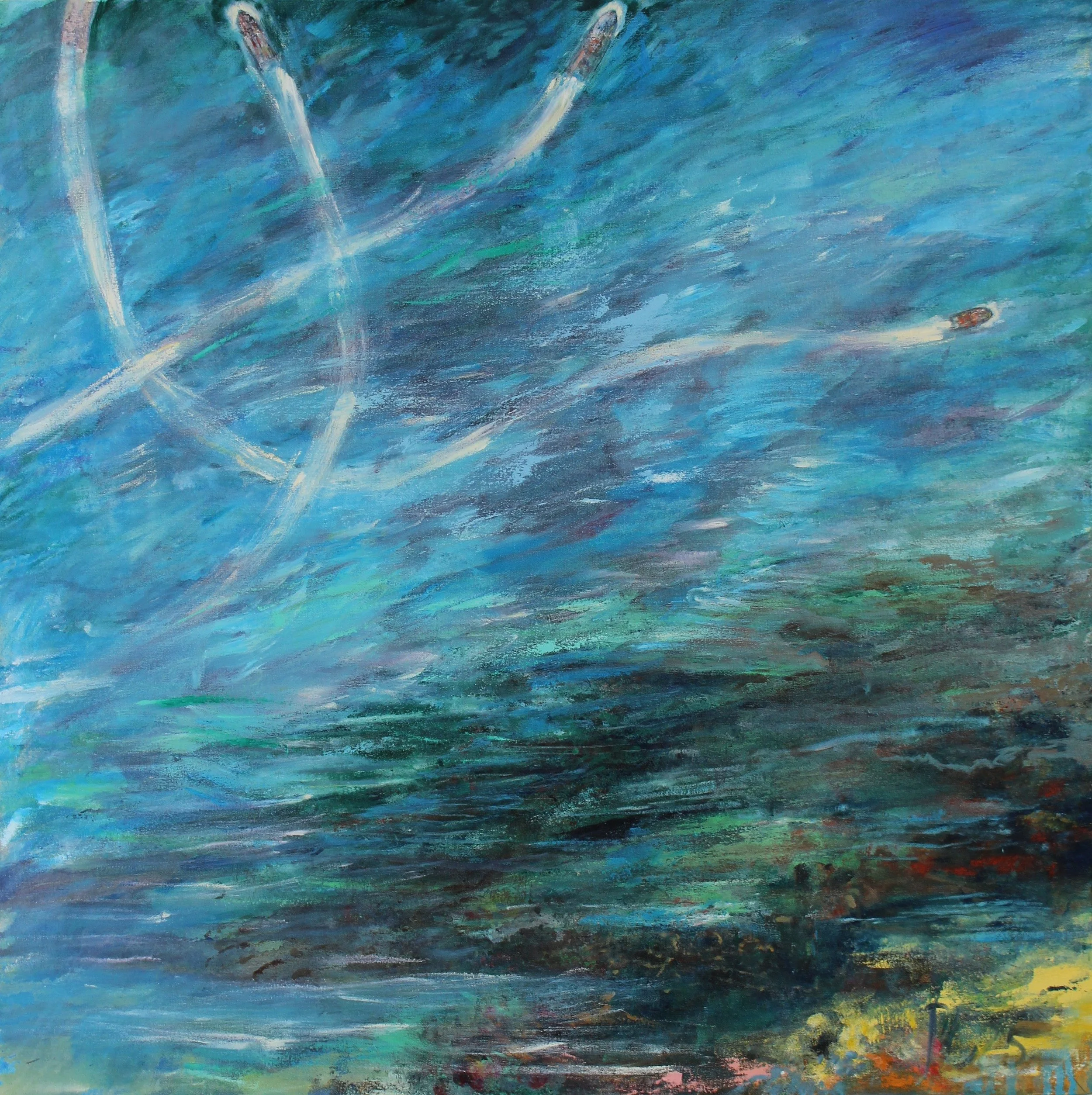
Channel Crossings by David Hugh Lockett
By Dr Razia Shariff, KRAN CEO
I was recently invited to be a panel member at the University of Kent’s symposium Humanity at a Crossroads on Edward Said (author of Orientalism and Culture and Imperialism - both seminal works that questioned and critiqued the western lens in academia and literature).
“Our time is indeed the age of the refugee.” (Said’s Reflections on Exile, published in Granta 13, 1984). Refugees and asylum seekers are being exiled and estranged from their homeland, which they are having to leave behind forever, creating a discontinuous state of being. They may reconstitute their broken lives, but nothing is secure. Violence is now bureaucratic and normalised, with control and consensus with imposed regimes of conformity, for example age assessments, legal paperwork of evidence processes.
We need to be “radical humanists” and cling to the central mast of community solidarity and hope, in a sea of fears. We must not be swayed by the knocks and sirens of the wider populist narrative. The vocabulary of the current policy and media narratives are of self defence, the systematic destruction of truth, of imposed domination.
We have a duty to use narration as liberation rather than oppression. When we choose to be silent we need to think about who we are protecting? Overton's window (Overton window - Wikipedia) suggests that popular policy has shifted from sensible and acceptable to radical and unthinkable, with a demonisation of resistance and agency as part of a western, northern shift in global consciousness.
But do we - refugees and asylum seekers, migrants, those with heritage from the global south complicit - see ourselves in the mirror of the western gaze?
We should resist the idea of a global value system, positioning refugees and asylum seekers as the issue, rather than the legacy of the past that created instability in the regions.
Creative industries, film, books, social media play into and reproduce this narrative when they should be critical of it (think of art activism). The “golden past” is being reenacted and reimagined in the present to uphold values of protectionism/nationalism and securitisation.
Borders become “theatres”, the common enemy seen as an “object”, stripped of all humanity. Governance is through fear, rather than cohesion - it is promoted as collective defence. The most marginalised and vulnerable are the threat, the target of suspicion by the politically-motivated productive management of perceptions. State stories and representations choose whose suffering matters the most with selective humanity. A moral simplification does not work as a counter response to this.
So, now that the local elections are well behind us, what do we need to do? Voters reported feeling ignored, insecure, angry about public services, housing, the cost of living, borders and the lack of change on political commitments.
We need to lower fear and rebuild trust in our local communities. People want reassurance that there is order, fairness, local pride and visible proof that things can change and improve. Migration and multiculturalism is now a major political faultline, the pressure is real, but the scapegoating of refugees and asylum seekers and migrants, too easy. Yes, the system needs to be managed, yes, services need to be invested in and available to all, yes, everyone should have the opportunity to contribute to society and the economy, and refugees and asylum seekers want all these things too.
The recent British Future’s report After the Fall asks why the public still think that migration is rising when in fact it has continued to fall. There has been a four-fold drop since its peak in 2023, with the possibility of negative net migration by next year. They identify three groups from Migration Skeptics (31%), to the Balancer middle (47%) to the Migration Liberals (19%) (Tracker-report-2026.Final_-1.pdf).
The public information gap is huge and people's fear is moving faster than the facts. The problems in society and the local community are not because of migration, we need to understand the real story here. For example 21% of NHS staff in England were of non-British nationality in June 2025, this percentage is higher for doctors and nurses.
Let’s be honest about the debate: we need people who come to the UK from abroad, as much as they need to find a future with us.
Humanity really is at a crossroads. We must resist falling into the “positioning” of refugees and asylum seekers in the current narrative. We need to widen our networks of allies across sectors and build a critical social moment where people realise that refugees and asylum seekers can, if supported, be the solution rather than the problem.
And that is what we hope to focus on as part of our post Kent Solidarity Regional Conference plans with local community groups to create a more enabling environment for the young people we work with.